
Amgen has exited the competitive development of Claudin 6 (CLDN6) therapies, which is still in its early stages, based on initial data from preclinical studies. Amgen, on July 5th 2024, had terminated the Phase 1 clinical trial of AMG 794, a CLDN6xCD3 bispecific T-cell engager (BiTE) with a half-life extension (HLE) technology, which was targeting patients with high-grade non-small cell lung cancer (NSCLC) and epithelial ovarian cancer (EOC).
The trial was halted after about a year, despite the fact that there were no changes in the safety profile of the drug. This update is expected to be reflected in the upcoming quarterly results, and no additional statements have been made by Amgen regarding the decision. [ref]
The recent termination of the AMG 794 clinical trial (NCT05317078) has sparked many questions in the biotech community. At Portrai, we conducted a postmortem analysis to uncover the potential reasons behind this decision.
Our report delves into the complexities of intratumoral heterogeneity, particularly focusing on the role of CLDN6-based T cell engagers in lung adenocarcinoma (LUAD). Here are some key insights from our findings:
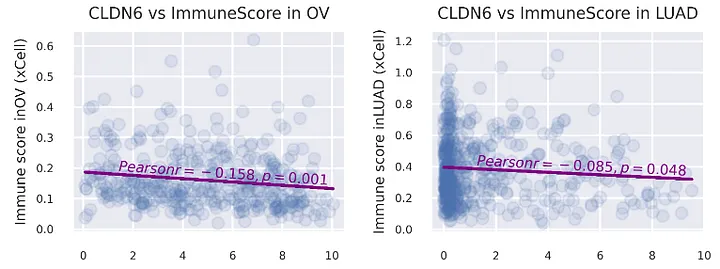
Intratumoral Heterogeneity: The colocalization of target expression and T cell distribution within tumors is crucial for the efficacy of T cell engagers. Our data revealed that regions with high CLDN6 expression but low T cell infiltration may be resistant to CLDN6-based T cell engagers. Similarly, CLDN6 is negatively correlated with the immune enrichment score in LUAD (r = -0.085, p = 0.048) and OV (r = -0.158, p = 0.001) in TCGA data.
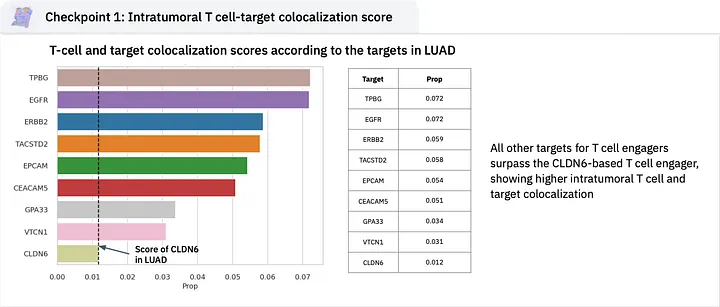
Comparative Analysis: Compared to TROP2, CLDN6 shows a highly discordant intratumoral distribution of targets and T cells. This discordance may contribute to the ineffectiveness of CLDN6-based therapies, highlighting the need for further investigation.
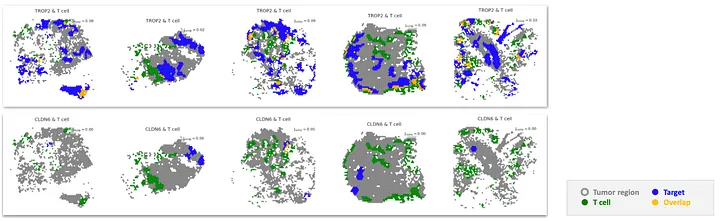
Therapeutic Efficacy and Toxicity: Our PortraiTARGET pipeline evaluates the therapeutic effects and potential toxicity of T cell engager targets. Through a series of checkpoints, we assess intratumoral T cell-target colocalization, target expression, and target specificity at both microenvironmental and organ levels.
Our comprehensive analysis suggests that CLDN6’s low colocalization with T cells and low intratumoral expression may have played a significant role in the trial’s termination. This highlights the importance of selecting targets that maximize therapeutic effects while minimizing toxicity.
We believe that by leveraging large-scale data-driven target discovery, we can improve the selection of T cell engagers, ultimately leading to more effective cancer treatments.