
doi: https://aacrjournals.org/cancerres/article/85/8_Supplement_1/2503/758333
Poster
Abstract
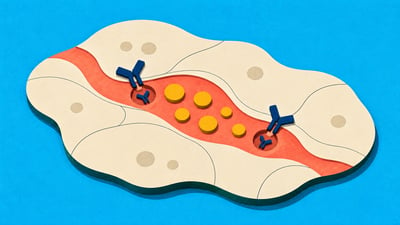
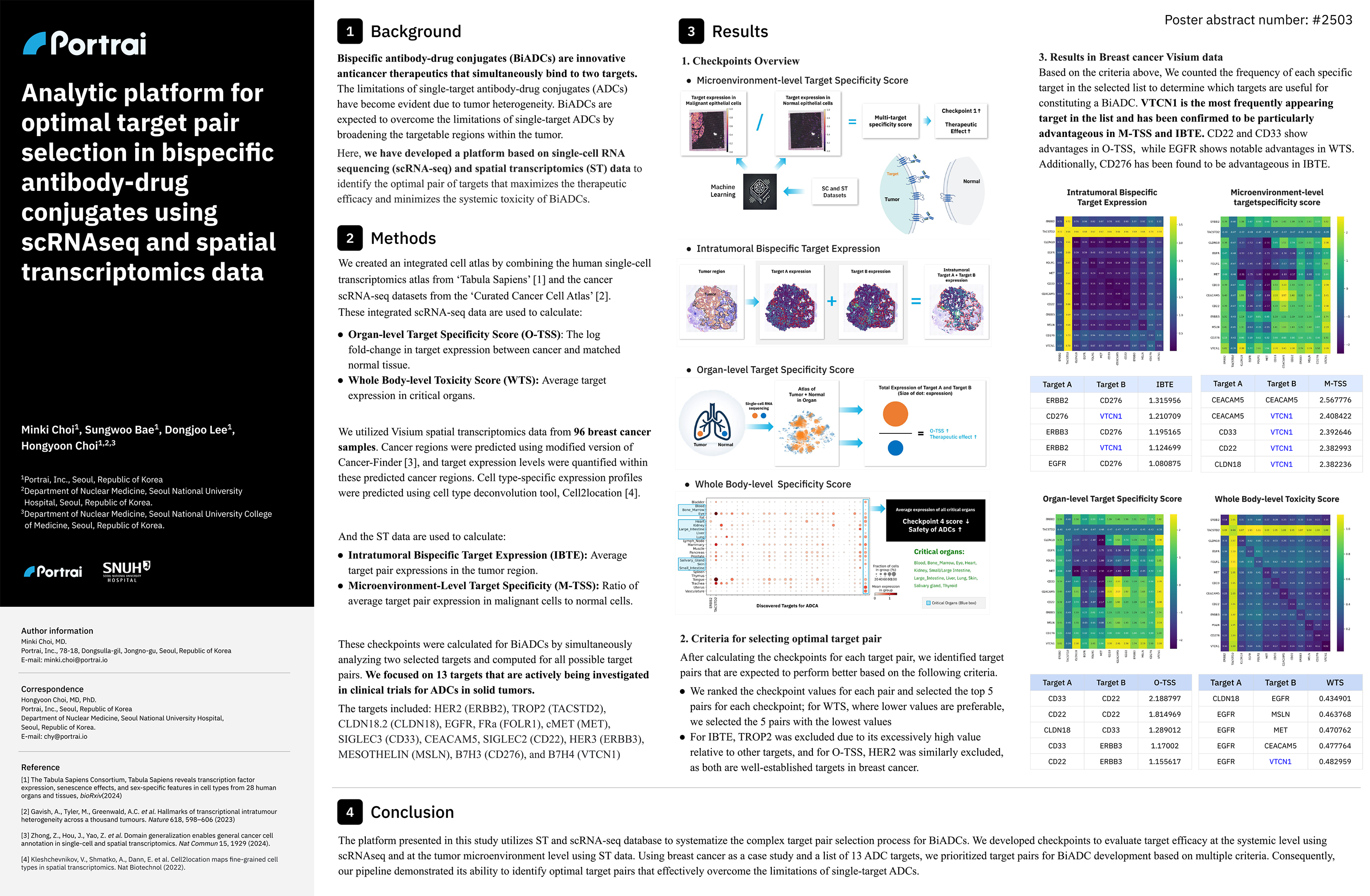
Background: Bispecific antibody-drug conjugates (BiADCs) are innovative anticancer therapeutics that simultaneously bind to two targets. The limitations of single-target antibody-drug conjugates(ADCs) have become evident due to tumor heterogeneity. BiADCs are expected to overcome the limitations of single-target ADCs by broadening the targetable regions within the tumor. Here, we have developed a platform based on single-cell RNA sequencing (scRNA-seq) and spatial transcriptomics (ST) data to identify the optimal pair of targets that maximizes the therapeutic efficacy and minimizes the systemic toxicity of BiADCs.
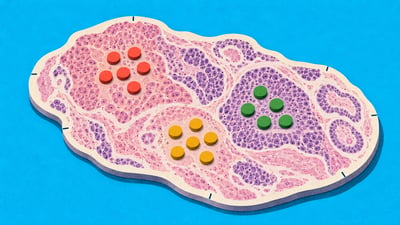
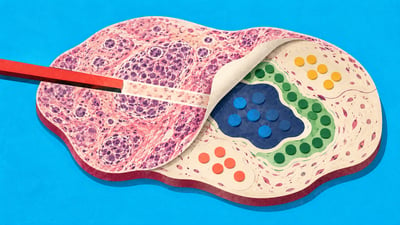
Methods: We created an integrated cell atlas by combining the human single-cell transcriptomics atlas from ‘Tabula Sapiens’ and the cancer scRNA-seq datasets from the ‘Curated Cancer Cell Atlas’. to calculate the ‘Organ-Level Specificity’ (expression fold-change between cancer and matched normal tissue) and the ‘Critical Organ Toxicity’ (average target expression in critical organs). And the ST data are used to calculate the ‘Intratumoral target expression’, ‘Microenvironment-Level Target Specificity’, defined by the expression of the target in malignant cells relative to normal cells. We utilized Visium data from 96 breast cancer based on the tissue microarray. These checkpoints were calculated for BiADCs by simultaneously analyzing two selected targets and computed for all possible target pairs. We focused on 13 targets that are actively being investigated in clinical trials for ADCs in solid tumors.
Results: After calculating the checkpoints for each target pair, we identified target pairs that are expected to perform better than single targets based on the following criteria. First, we selected pairs that showed higher checkpoint values compared to their corresponding single targets. Then, from these selected pairs, we chose those that outperformed their corresponding single targets in at least three checkpoints. Applying the criteria, we identified target pairs for BiADCs that are likely to achieve superior therapeutic outcomes compared to single targets. The pairs involving CEACAM5 or VTCN1 generally achieve a high therapeutic index. And the target pairs with VTCN1 exhibit lower critical organ toxicity compared to other targets for breast cancer.
Conclusion: The platform presented in this study utilizes scRNAseq and ST data to systematize the complex target selection process for BiADCs. We developed checkpoints to evaluate target efficacy at the systemic level using scRNAseq and at the tumor microenvironment level using ST data. Using breast cancer as an example case and the list of 13 ADC targets, we identified CEACAM5 or VTCN1-based target pairs as optimal partners for BiADCs. Consequently, our pipeline demonstrated its ability to identify target pairs that are expected to perform better than specific single-target ADCs.
Authors
Minki Choi, Sungwoo Bae, Dongjoo Lee, Hongyoon Choi