A technology reaches true mass adoption not when everyone talks about it by name, but when people use it in everyday decision-making without consciously thinking about it.
Imagine a drug development meeting in 2030. When the research team evaluates a new target, the system simultaneously displays its expression in tumors and normal tissues, its location across different cell types, interpatient variability, and the surrounding immune cells. When the antibody’s affinity, linker, or payload is modified, the system simulates how the drug will be distributed within the tissue. The clinical team compares patient populations to determine where the balance between efficacy and toxicity is most favorable.
No one in that meeting may say, “Let’s start a spatial transcriptomics analysis.” That is because spatial information is already embedded in target selection, drug design, and patient selection.
The true mass adoption of spatial transcriptomics is unlikely to mean simply expanding a single experimental field. Rather, it will be the process by which the spatial context of tissue becomes foundational information for drug development and precision medicine.
From Data to Models of Tissue
Until now, spatial transcriptomics has primarily measured which cells and genes are present within a tissue and where they are located. The next step is to use measured data to predict phenomena that cannot be directly observed.
Spatial foundation models can learn recurring structures across different tissues and diseases. As vision-gene-language models capable of jointly processing pathology images, gene expression, and natural language knowledge continue to advance, they may generate hypotheses about cell states and interactions even in unfamiliar tissues. (Link: https://link.portrai.io )
Microscopic-PK/PD models how drugs move, bind, and exert their effects within tissues at the spatial level, allowing researchers to compare targets, antibodies, linkers, payloads, and dosing conditions before conducting physical experiments.
However, simulations are not replicas of reality. Even sophisticated models can produce incorrect conclusions if they fail to adequately account for blood flow, protein expression, drug metabolism, and immune responses. The role of AI and modeling should not be to replace expert judgment, but to expand the range of observations and comparisons that humans can make simultaneously.
Three Possible Futures
The first is an optimistic scenario.
The bottlenecks in application, tissue, experiment, data, analysis, and trust are resolved together. Spatial data becomes a standard input in drug development, connecting target, drug, and patient selection with tissue-level simulations. Candidates with a high probability of failure are eliminated earlier, while physical experiments focus on hypotheses with high information value. Spatial data-driven simulations replace animal experiments, accelerate drug development, and reduce risk.
As sufficient tissue data from individual patients accumulates, the unit of precision medicine may expand from genetic variants to tissue ecosystems. Even patients with the same biomarker may receive different treatment strategies depending on target location, immune cell accessibility, and the drug delivery environment.
The second is a realistic scenario.
Spatial information does not become the standard across every field at the same time. Instead, it is adopted first in modalities such as ADCs, RPTs, and TCEs, where target location and the tumor microenvironment directly affect efficacy and toxicity, as well as in cancer types where the cost of treatment failure is high. As the number of validated use cases grows, its application gradually expands to other diseases and stages of development.
Along this path, spatial transcriptomics complements the limitations of conventional pathology, single-cell analysis, and genomic analysis rather than replacing them. The preferred approach will not necessarily be the most expensive technology, but the combination that provides the minimum resolution required to answer a given question at an appropriate cost.
The third is a negative scenario.
Experimental throughput and data production continue to increase, but spatial transcriptomics fails to demonstrate clinical or business value. Institutions use different formats and analytical methods, and the results remain confined to compelling images and academic publications, with limited use in actual candidate selection. Spatial transcriptomics may remain a premium research service reserved for a small group of specialists and high-budget projects.
Which scenario becomes reality will not be determined by technological progress alone. It will depend on whether spatial data can demonstrate which decisions it improves and by how much.
Precision Medicine Without Accessibility Could Create New Disparities
As patient-specific tissue data begins to inform treatment decisions, data ownership and privacy will become increasingly important. Spatial data generated from tissue may contain sensitive information not only about a patient’s genome, but also about disease status and treatment response. If costly tissue analyses and personalized simulations are available only to some patients, precision medicine could widen health disparities rather than reduce them.
Cost, accessibility, and data governance are therefore as important as technical accuracy. A new consensus will be needed to balance public references, private innovation, and individual rights.
The Winner Will Be a Connected Ecosystem, Not a Single Technology
It is difficult to predict whether the future winner will be an instrument company, a data company, or an AI company. Instruments must generate reliable data, while tissue networks must provide clinical context. Computing infrastructure must be capable of handling the data, and AI must translate the results into decisions that can be reviewed. Hospitals, pharmaceutical companies, and regulatory authorities must validate the utility and safety of those decisions.
No single company needs to own every step. However, if these steps remain disconnected, they will fail to generate value as a whole. Techbio companies must therefore gradually integrate these processes vertically. Future competitiveness is more likely to come from the ability to connect the entire loop and accumulate evidence throughout the process than from the ability to monopolize a single technology.
What Portrai Aims to Build
Portrai’s goal is not simply to become a company that produces large volumes of spatial transcriptomics data. It is to build the infrastructure needed to translate the spatial context of human tissues into better targets, better drugs, and more appropriate patient selection.
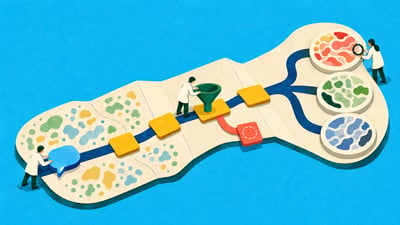
Data and AI alone will not be enough. Tissues from diverse patients, reproducible experiments, scalable computing, explorable analytical environments, and independent validation must be connected in a single workflow. What we aim to build is not a vast repository of maps, but a learning system in which each new piece of data enables more precise decision-making.
This vision also has clear limitations. Not every disease requires spatial information, and predictions cannot replace real biology. The goal is not to make spatial the answer to every problem, but to make it the most reliable tool for questions in which spatial context is decisive.
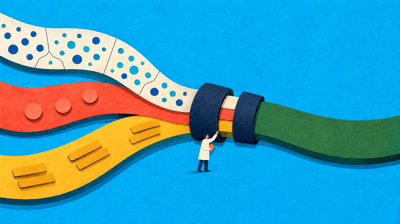
The six bottlenecks discussed throughout this series are not independent obstacles. A strong application requires the right tissue, and high-quality tissue requires reproducible experiments. Automated experiments create a data explosion, while large-scale data demands new approaches to analysis and computing. All of these processes must ultimately be connected through trust.
Mass adoption will not happen when everyone performs spatial experiments. It will happen when spatial information becomes embedded in everyday decisions.
The future of spatial transcriptomics will not be determined solely by how much more precisely we can observe biology. It will be determined by how effectively we can translate what we observe into better therapies and better choices for patients.