0. The Rise of Spatial Biology
Our efforts to explore biological phenomena and understand disease have long focused on changes occurring at the cellular and molecular levels. This approach has created a long development cycle through which scientific discoveries are ultimately translated into tangible outcomes: new drugs.
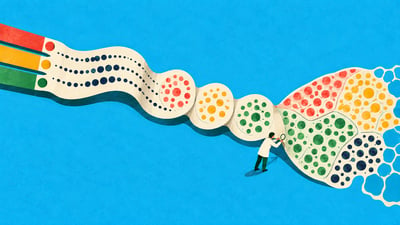
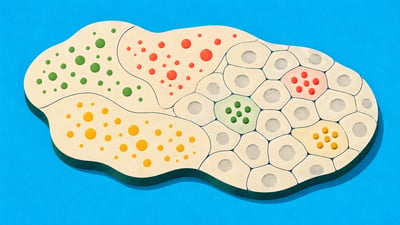
The scale of biological data began to grow exponentially with the emergence of spatial biology. Spatial transcriptomics and spatial proteomics were named Nature Methods’ Method of the Year in 2020 and 2024, respectively. These advances opened a new arena for biology, enabling researchers to explore molecular information in its spatial context and integrate multiple layers of data.
By collecting and digitizing molecular expression data associated with disease, spatial biology has also helped drive a shift from hypothesis-driven research to data-driven research. Researchers can now generate countless hypotheses and test or simulate them directly using data.
Today, a single fingernail-sized tissue section can generate hundreds of gigabytes of information. As spatial biology converges with rapidly advancing AI, we are entering an era of unprecedented possibilities.
1. The Age of Agents: From Analytical Tools to Decision-Making Systems
The role of spatial biology tools is changing. In the past, their primary purpose was to help researchers visualize and analyze data effectively. Whenever a new tool enabled a novel discovery, it could lead to a high-profile publication, be recognized as an innovative technology, or even become the foundation of a startup serving a segment of the industry.
In the age of agents, however, tools that merely support analysis or specific discoveries are no longer the end goal. What is needed is an agentic system that recommends what action to take based on complex data and naturally connects those recommendations to the next decision in drug development.
Spatial biology must evolve beyond a tool for exploration. It must become a decision-making engine and a patient-centric, data-driven operating system for drug development.
2. The Shifting Center of Gravity in Spatial Biology
From Understanding Cell States to Predicting Drug Action
Cell type annotation, niche discovery, and pathway enrichment are no longer sufficient differentiators.
The questions that matter now are:
Where is a target expressed, and in which microenvironments can effective drug action occur?
How can toxicity and efficacy be distinguished within a spatial context?
The focus of spatial biology is shifting from explaining biology to predicting how drugs work. This transition reflects the process through which spatial biology, combined with AI, is becoming an operating system capable of creating tangible value in drug development rather than remaining solely an exploratory tool.
3. A Drug Is No Longer Just a Molecule
A Therapeutic Entity Defined by Its Spatial Context
With emerging drug modalities such as ADCs, RPTs, bispecifics, and cell therapies, some of which have already achieved blockbuster status, a drug is no longer simply a molecule. It is a system that operates spatially.
How far does the payload travel?
In which tissues is the bystander effect amplified?
How does heterogeneity in target expression affect actual efficacy?
Once a drug reaches its destination, how does it interact with the surrounding cells and influence disease at the systemic level?
These questions cannot be answered using in vitro or bulk data alone. They can only be properly defined within the framework of spatial biology.
4. Spatial Intelligence That Directly Influences the Drug Development Value Chain
From Target Discovery to IND Strategy
AI powered by spatial biology can no longer remain confined to upstream research.
It must contribute directly to:
Redefining the criteria for target prioritization
Establishing a logical basis for indication expansion
Enabling patient stratification and companion diagnostics
Reducing uncertainty in preclinical-to-clinical translation
In other words, spatial intelligence must occupy a position where it can change the probability of success for a drug asset.
5. The Fundamental Limitations of Human Data
Why Spatial Biology Data Will Always Be Insufficient
Human-derived spatial data is inherently scarce.
Every patient is different.
Diseases evolve over time.
Treatment history and environmental factors continuously reshape biology.
No matter how many cohorts we collect, we are still observing only a small fraction of the possible biological world.
6. AI as a Means of Expanding the World, Not Merely Completing Data
From Interpolation to Extrapolation
Conventional AI has largely remained within the boundaries of prediction based on available data: interpolation. In drug development, however, the biology that has not yet been observed is often more important.
Patients who have not yet been observed
Drugs that have not yet been tested
Tissue states that exist but have not yet been sampled
AI should not merely fill gaps in existing data. It should expand the space of possible biology.
7. A Principle-Constrained World Model
A Generative and Predictive Model Built on Physics and Biology
What we need is not simply another generative model. Predicting previously unobserved patients or drugs solely from existing data would only increase uncertainty. As discussed above, molecular data derived from human disease remains scarce, regardless of how large the dataset may appear.
Prediction and generation from such sparse data require constraints. These constraints must be grounded in the principles of natural phenomena.
This is the foundation of a world model capable of generating and predicting biology at the molecular level while operating within the following constraints:
Physical laws, including diffusion, binding, distance, and concentration
Biological principles, including expression regulation, cell-cell interactions, and tissue architecture
Principles of drug action, including pharmacology and modality-specific constraints
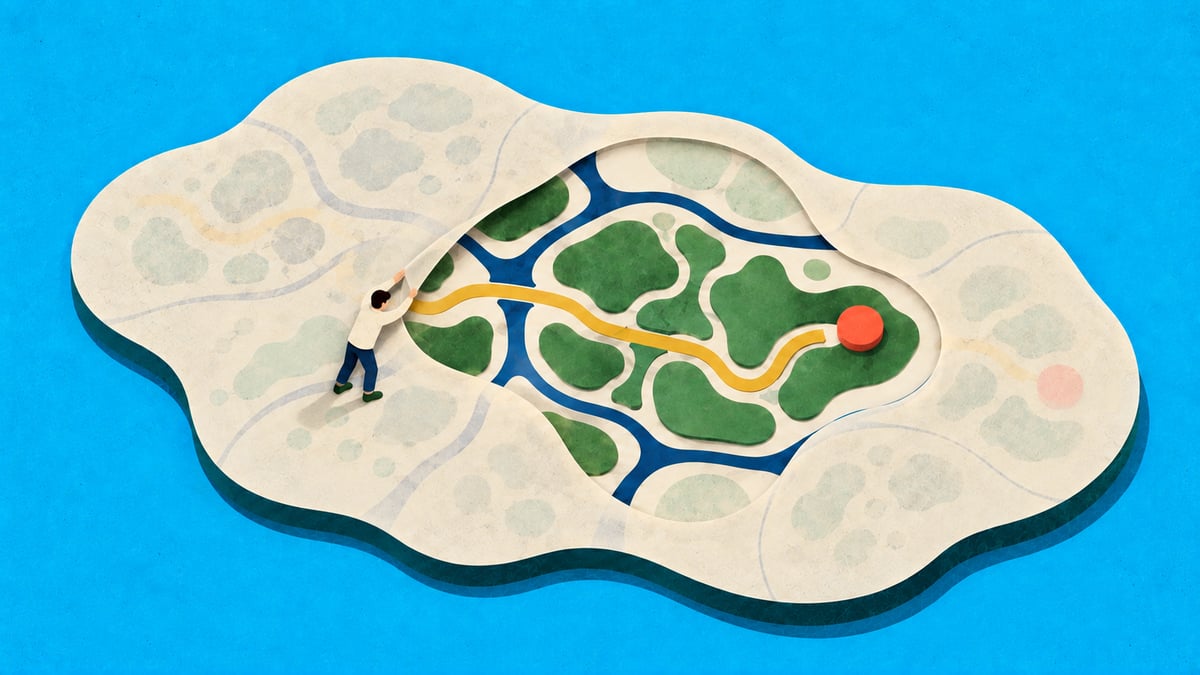
This model should not produce merely plausible representations. It must create a virtual world in which experiments and development strategies can be designed.
8. Spatial Biology × Agents × World Models
A New Stack for Redesigning Drug Development
The systems of the future will perform three functions simultaneously:
Understand spatial data
Predict drug action
Recommend the next experiment and development strategy
This is not a single model. It is the integration of an agentic system, a spatial world model, and drug-aware AI.
9. Conclusion: Beyond a Platform, Toward a Drug Creation System
The future of spatial biology is not an analytical platform.
It is a system for creating drugs.
This system will:
Move beyond the limitations of human data
Understand biology in its spatial context
Change the actual probability of success in drug development
At this point, AI is no longer merely a tool. It becomes a co-creator.