Portrai Insights
Insights on data analysis, AI, and the platform we're building at Portrai.
Latest
55 articles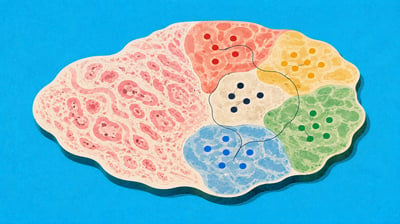
Mapping cell types in the tumor microenvironment from tissue images via deep learning trained by spatial transcriptomics of lung adenocarcinoma
Profiling heterogeneous cell types in the tumor microenvironment (TME) is important for cancer immunotherapy. Here, we propose a method and validate in independent samples for mapping cell types in th
 Portrai-
GeneDART: Extending gene coverage in image-based spatial transcriptomics by deep learning-based domain adaptation with barcode-based RNA-sequencing data
Spatial transcriptomics (ST) technologies provide comprehensive biological insights regarding cell-cell interactions and peri-cellular microenvironments. ST technologies are divided into two categorie
Portrai-
STopover captures spatial colocalization and interaction in the tumor microenvironment using topological analysis in spatial transcriptomics data
Unraveling the spatial configuration of the tumor microenvironment (TME) is key to understanding tumor-immune interactions to translate them into immuno-oncology. With the advent of spatially resolved
Portrai-
CellDART: cell type inference by domain adaptation of single-cell and spatial transcriptomic data
Deciphering the cellular composition in genome-wide spatially resolved transcriptomic data is a critical task to clarify the spatial context of cells in a tissue. In this study, we developed a method,
Portrai-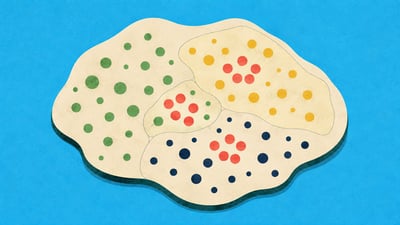
Spatial Transcriptomics-based Identification of Molecular Markers for Nanomedicine Distribution in Tumor Tissue
The intratumoral accumulation of nanomedicine has been considered a passive process, referred to as the enhanced permeability and retention (EPR) effect. Recent studies have suggested that the tumor u
Portrai-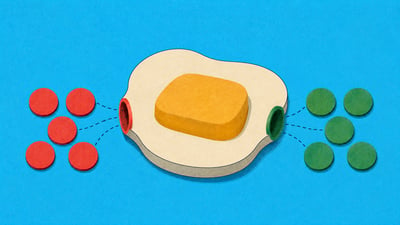
Different Glucose Metabolic Features According to Cancer and Immune Cells in the Tumor Microenvironment
A close metabolic interaction between cancer and immune cells in the tumor microenvironment (TME) plays a pivotal role in cancer immunity. Herein, we have comprehensively investigated the glucose meta
Portrai-
Fully automated identification of brain abnormality from whole-body FDG-PET imaging using deep learning-based brain extraction and statistical parametric mapping
The whole brain is often covered in [18F]Fluorodeoxyglucose positron emission tomography ([18F]FDG-PET) in oncology patients, but the covered brain abnormality is typically screened by visual interpre
Portrai-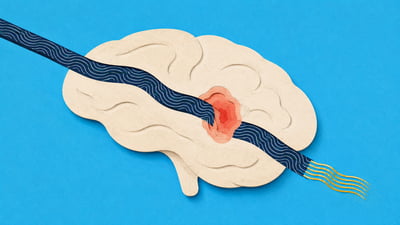
Prediction of post-stroke cognitive impairment using brain FDG PET: deep learning-based approach
Post-stroke cognitive impairment can affect up to one third of stroke survivors. Since cognitive function greatly contributes to patients’ quality of life, an objective quantitative biomarker for earl
Portrai-
Alzheimer’s Disease Neuroimaging Initiative. Hippocampal glucose uptake as a surrogate of metabolic change of microglia in Alzheimer’s disease
Dynamically altered microglia play an important role in the progression of Alzheimer’s disease (AD).
Portrai-WRITTEN BY
Portrai's Authors
Capturing and compounding Portrai's insights.
Daeseung Lee
CEO
Physician-scientist who left clinical practice to bring spatial biology into oncology drug discovery
Hongyoon Choi
CTO
Builds the algorithms that turn spatial transcriptomics into actionable target intelligence
Hyung-Jun Im
CSO
Nuclear medicine specialist linking imaging biomarkers to next-generation radiopharmaceuticals
Kwonjoong Na
CMO
Translates platform insights into IND-enabling decisions across oncology programs
Portrai
Official posts from the Portrai team, decoding disease with spatial intelligence