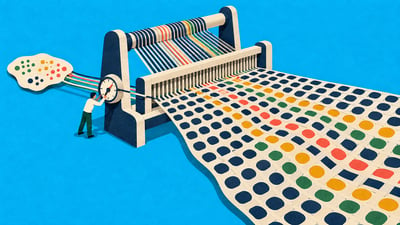
Spatial Transcriptomics (ST) is changing the landscape of precision oncology by decoding both the location and gene expression of cells simultaneously. Yet, behind the stunning AI-generated maps lies an inconvenient truth: the highly precise Visium HD preparation process still relies heavily on the steady hands of human researchers.
Working with slides that cost tens of thousands of dollars, researchers constantly battle micro-pipetting errors, slight delays in reaction times, and temperature fluctuations. Humans are not machines; thus, variations between operators are inevitable, leading directly to compromised data consistency. For Portrai, a company building "Spatial Intelligence," this noisy, manual data acts as a critical structural bottleneck that limits AI model performance. No matter how sophisticated an AI algorithm is, it cannot overcome the fundamental law of "Garbage In, Garbage Out."
To permanently eliminate this dilemma, Portrai has partnered with ABLE Labs, a robotics automation specialist, to co-develop the ‘Visium HD-based Spatial Prep Automation System’. This is not a mere PR collaboration. It is a necessary restructuring of the wet lab—assigning mechanical tasks to machines so humans can focus on interpreting biological meaning.
The automation system we are building with ABLE Labs physically dismantles the limitations of manual workflows:
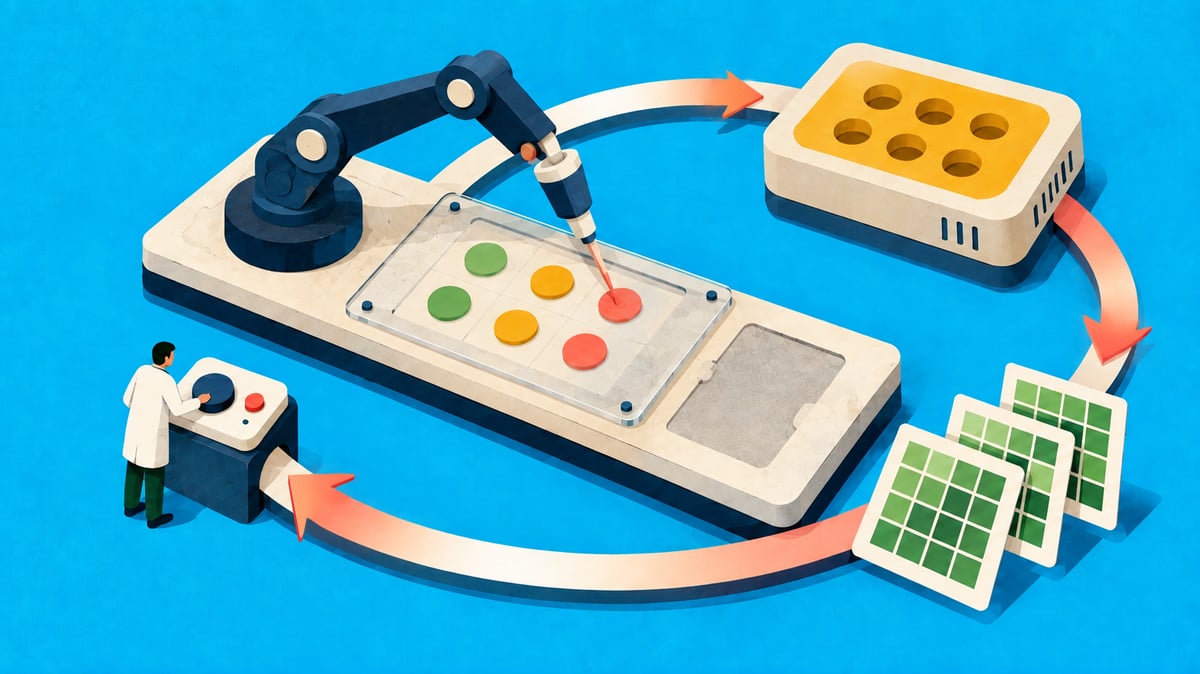
First, a robotic arm equipped with a 1-channel P200 pipette and a Tilter module handles precise dispensing of reagents within the 2–200 µL range with near-zero error.
Second, the tedious manual film-sealing of cassettes is entirely automated. We engineered a custom Adapter Rack and silicone gasket cover made of heat-resistant materials capable of withstanding over 110°C, preventing any evaporation or deformation during thermal cycling.
Third, to guarantee absolute thermal consistency, the system directly integrates with the Bio-Rad PTC Tempo. The robot arm manages the loading and unloading of cassettes, executing exact temperature protocols flawlessly.
Fourth, we replaced the unreliable method of visually guessing pipetting coordinates. Instead, researchers use a transparent Indicator Cover and a dedicated UI to input exact coordinates, which are seamlessly transmitted to the control software via API.
As a result, notoriously finicky workflows—from post-H&E destaining to Probe Hybridization, Extension, and Pre-Amplification—are entirely brought under robotic control.
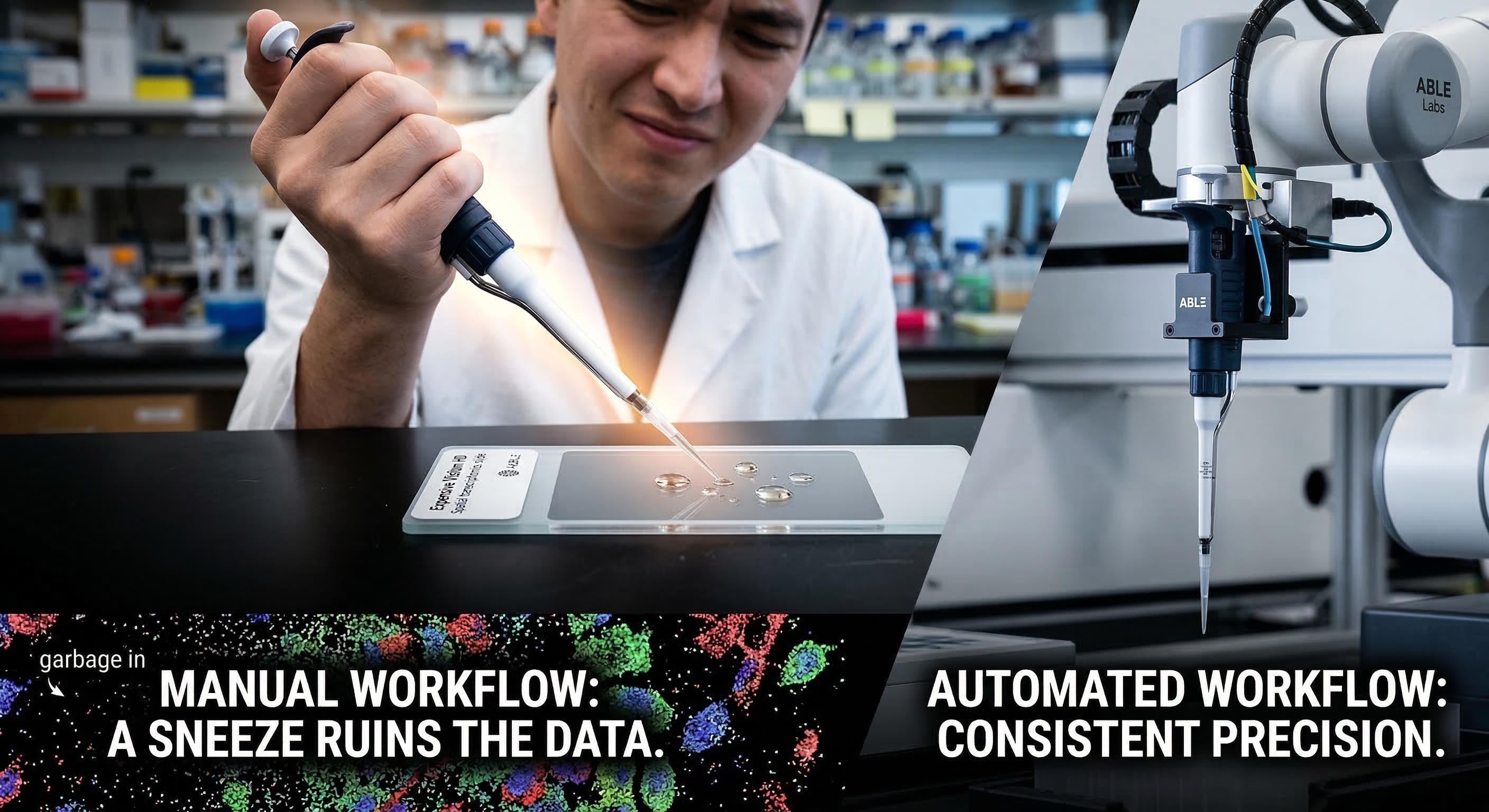
Portrai is not developing this machine just to sell hardware. Our objective is to complete a 'closed-loop' for high-reproducibility data production tailored for AI drug target discovery. As ABLE Labs' intelligent liquid handling robots churn out impeccably consistent data, Portrai’s spatial biology AI ingests it, refining our models and drastically improving the success rate of target identification.
The future of drug discovery does not simply belong to those with the most data, but to those who produce data in the most strictly controlled environments. The standardized infrastructure Portrai and ABLE Labs are building today will serve as the new syntax for the global precision medicine ecosystem.
Learn More